

The Honest, Data-Backed Answer
If you’re asking are presale condos a good investment in Vancouver in 2026, the honest answer is: only for a specific type of buyer, in a specific type of project, with a specific type of plan. For everyone else, the math has genuinely changed, and most blog posts on the topic are still quoting 2021 logic.
This guide is different. We’re not going to rehash the usual “pros: leverage, cons: delays” bullet points you’ll find everywhere else. Instead, you’ll get a proprietary 10-point Presale Investment Scorecard, a completion-year cohort risk table covering 2026 through 2029, actual break-even mortgage math, a contract clause red-flag checklist, an opportunity-cost comparison against other investments, and (uniquely) a recovery playbook for readers who already bought at the 2021 and 2022 peak.
By the end, you’ll either feel confident moving forward or confident walking away. Either outcome is a win.
Whether you’re a first-time buyer eyeing a downtown Vancouver presale condo, an investor weighing a Burnaby project near SkyTrain, or a family considering a North Vancouver presale townhome, the core question remains the same: are presale condos a good investment in Vancouver given today’s numbers? Let’s work through it with real data.
The 2026 Reality: What Actually Changed in the Vancouver Presale Market
Before we answer whether presales are a good investment, let’s look at what the market actually looks like right now, not what it looked like three years ago.
The numbers tell a story most sales centres won’t:
- Q1 2026 presale sales across BC: roughly 124 units, down from nearly 6,000 in Q1 2021. That’s roughly a 98% collapse in quarterly absorption.
- 2025 saw just 60 project launches and fewer than 4,800 units released across Metro Vancouver, one of the weakest presale years in over a decade.
- The Greater Vancouver condo benchmark price sits near $706,700, down roughly 7.8% year-over-year.
- There are roughly 5,400 to 7,000 unsold, already-completed new condos sitting empty in the region.
- Over 61% of about 16,589 proposed presale units across Metro Vancouver fall below the 70% pre-sold threshold typically required to unlock construction financing.
Translation: supply is glutting, absorption is frozen, and many “launched” projects may never break ground. Buyers who signed in 2021 and 2022 at peak prices are in some cases taking $100K to $500K+ losses on assignments before completion.
This is the context every 2026 presale decision needs to start from. The market isn’t dead, but it is discriminating. For month-by-month benchmark movement, cross-reference the Greater Vancouver REALTORS market reports and the CMHC Housing Market Information Portal before you sign anything.

The Case For Buying a Vancouver Presale in 2026 (It’s Narrower, But Real)
Despite the headlines, there are still conditions under which a presale can outperform a resale condo or a REIT over a 7 to 10 year hold. So when people ask are presale condos a good investment in Vancouver today, the fair answer is “yes, under four specific conditions.” Here they are.
Structural supply-demand is still in the buyer’s favor long term
Metro Vancouver’s geography (mountains, ocean, U.S. border) and zoning make meaningful supply growth slow. Population growth, immigration targets, and interprovincial migration have not slowed. Fewer launches today equals a thinner supply pipeline for 2028 to 2030, which can support prices for units delivered in that window.
Developer incentives are the best they’ve been in a decade
In a market where developers must hit a 70% pre-sale threshold to secure financing, buyers finally have leverage. In 2026 it’s common to negotiate:
- Extended deposit structures (5/5/5/5 instead of 10/10)
- Assignment-friendly contracts (historically a non-starter)
- Decorating credits of $10,000 to $30,000
- Capped strata fees for year one
- Mortgage rate buy-downs or bridge programs
None of this existed at the 2021 peak.
The new First-Time Home Buyer GST Rebate (Bill C-4)
Effective 2026, eligible first-time buyers can receive up to 100% of GST paid on a new home, to a maximum of $50,000, for homes priced under $1M (phased out up to $1.5M). For owner-occupier investors who plan to live-in first, this is a material, often-overlooked boost.
A 2-5-10 new home warranty is a real asset
Every new build in BC carries the mandatory 2-5-10 warranty through BC Housing’s Home Warranty Insurance program: 2 years labour and materials, 5 years building envelope, 10 years structural. Resale condos don’t come with that.
The Case Against: The Risks Nobody Wants to Explain at the Sales Centre
Appraisal shortfalls at completion
If prices drop between signing and completion, the bank’s appraisal will too. You’ll need to cover the shortfall in cash, often $50,000 to $200,000. This is what sunk thousands of 2021 and 2022 buyers.
Construction delays and cancellations
12 to 24 months of delay is standard. Outright cancellation (deposit returned, years lost) is rising in 2026 as projects fail to hit financing thresholds.
Negative cash flow from day one
In Vancouver’s current rental market, with roughly $2,600 to $3,100 for an unfurnished 1-bed, most 2026 presales will carry negative monthly cash flow once mortgage, strata, tax, and insurance are modelled at today’s rates. You are betting on appreciation, not income.
Tax stack
On top of the purchase price you’ll pay:
- 5% GST (with partial rebate for qualifying owner-occupiers)
- BC Property Transfer Tax on a sliding scale
- The BC Home Flipping Tax (20% on profit if sold within 365 days of completion, phased out by 730 days) per the Province of BC
- Potential speculation and vacancy tax if left empty
Together these can eat 8 to 12% of purchase price before you ever see a rent cheque.
The Presale Investment Scorecard: A Quantitative Way to Decide If Presale Condos Are a Good Investment in Vancouver
Here’s a framework we’ve never seen published elsewhere. Every Vancouver presale should score 70+ to be a defensible investment in 2026. Below 50 is a pass, no matter how good the renderings look.
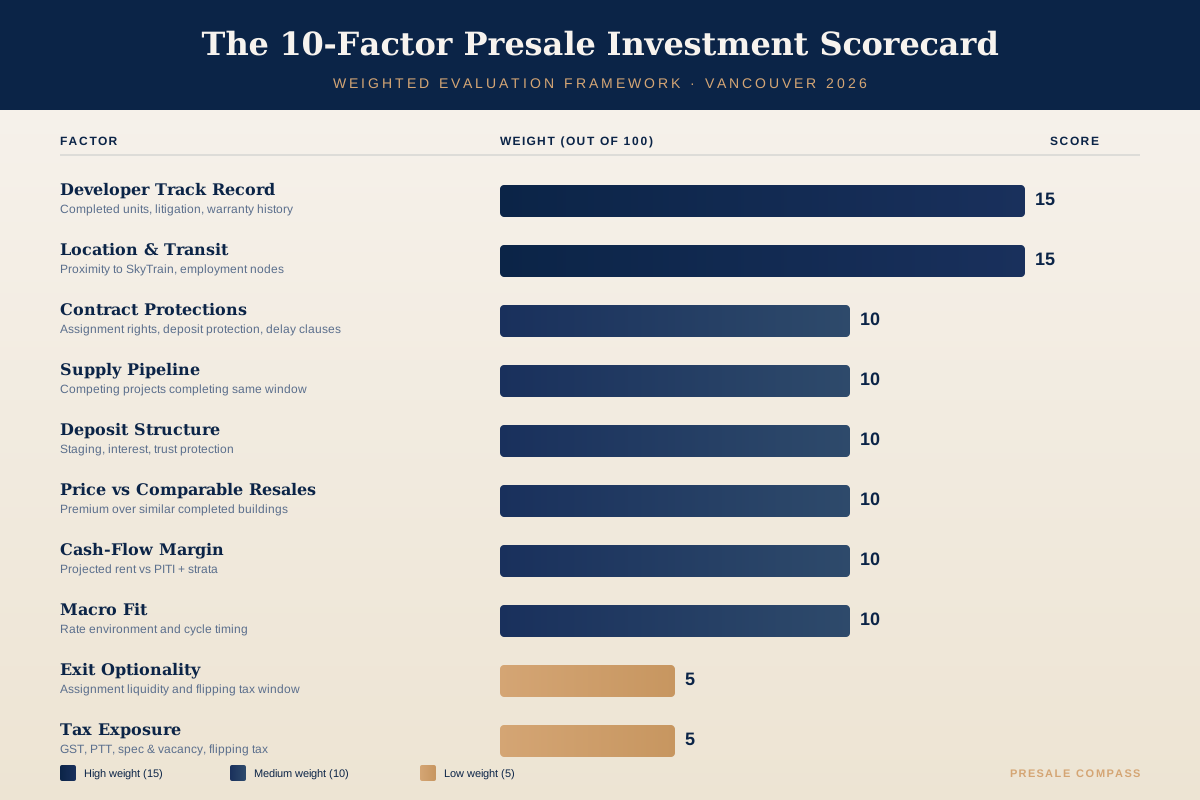
| # | Factor | Weight | What “10/10” Looks Like |
|---|---|---|---|
| 1 | Developer track record | 15 | 10+ completed projects in Metro Vancouver, zero litigation, on-time delivery history |
| 2 | Location: transit and employment | 15 | 7 min or less walk to confirmed SkyTrain, major employer hub within 2 km |
| 3 | Local supply pipeline 2026 to 2029 | 10 | Fewer than 500 competing units delivering in same 18-month window within 1 km |
| 4 | Deposit structure | 10 | 15% total or less, staged over 18 to 24 months, with assignment rights |
| 5 | Price per sq ft vs resale comps | 10 | Within 10% of comparable resale PSF (ideally below) |
| 6 | Cash-flow margin at stress-test rate | 10 | Breaks even or positive at a 6.5% stress-test rate |
| 7 | Exit optionality | 5 | Assignment allowed, rental allowed, no owner-occupy restriction |
| 8 | Contract protections | 10 | No unilateral material-change clause, capped substitution rights |
| 9 | Tax exposure | 5 | Owner-occupier GST rebate eligible, not subject to flipping tax at intended sale date |
| 10 | Macro fit | 10 | Buyer has 7+ year horizon and 6 months or more of carrying-cost reserves |
Use it like this: rate each factor 0 to 10, multiply by the weight, sum. Anything below 70 means the deal needs to be renegotiated or passed on.
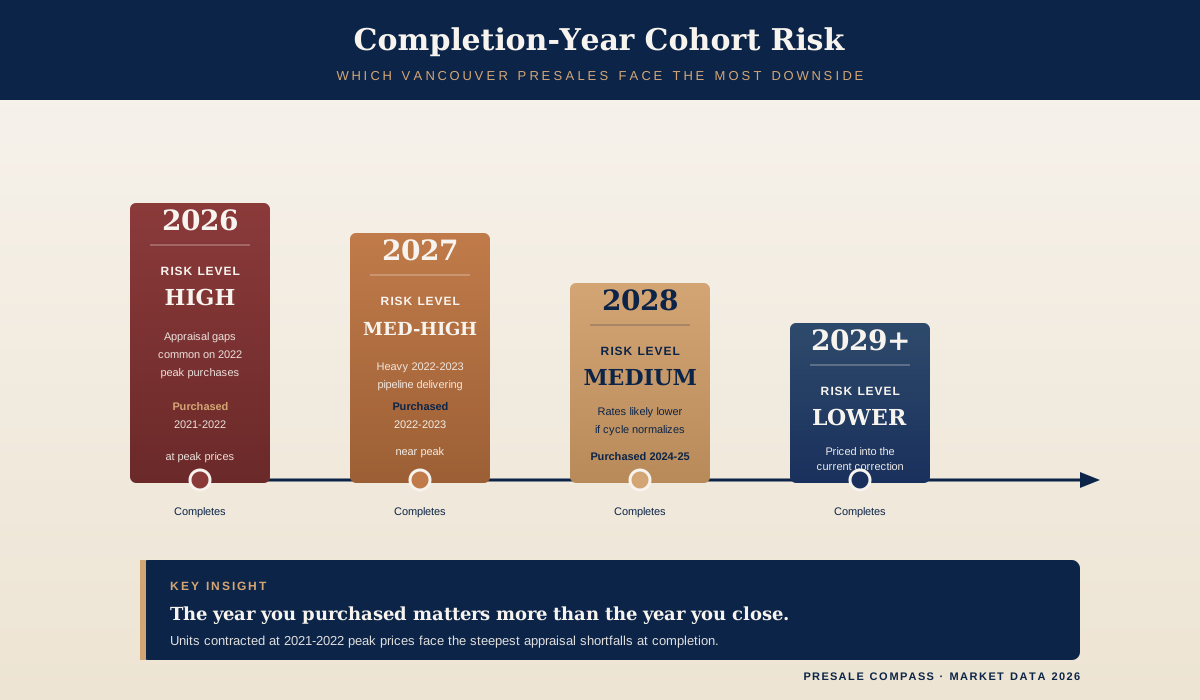
Completion-Year Cohort Risk: When Does Your Unit Actually Deliver?
This is the analysis virtually no competing article provides, and it may be the most important one for 2026 buyers.
Not every “presale in Vancouver” carries the same risk. It depends on when your specific project completes and how much supply competes with it in that window.
| Completion year | Pipeline volume | Absorption outlook | Risk to presale buyer |
|---|---|---|---|
| 2026 | Very high (2021 and 2022 launches completing now) | Soft: rents flat, resale inventory elevated | High: appraisal gap risk, assignment glut |
| 2027 | High | Improving: 2025 launch freeze thins future supply | Moderate: depends on sub-market |
| 2028 | Moderate | Tightening: fewest launches in a decade filter through | Lower: best cohort for today’s buyers |
| 2029+ | Low | Strong: compounding under-build catches up | Lowest, though interest-rate path still unknown |
The strategic takeaway: if you’re buying today, the units completing in 2028 and 2029 are structurally better positioned than those completing in 2026 and 2027. Ask your agent exactly when the project is scheduled to complete, then stress-test against the cohort above.
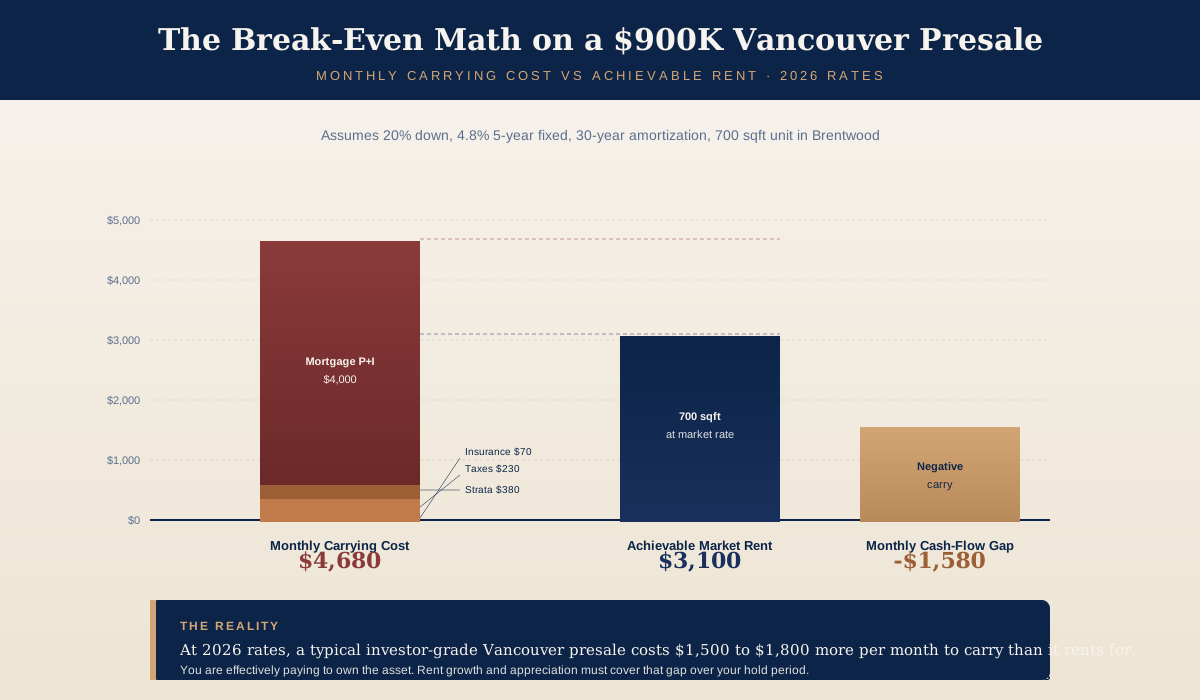
Break-Even Math: The Numbers Every Investor Should Run
Most articles wave their hands at “cash flow.” Here’s the actual math on a $750,000 one-bedroom presale completing in 2028.
Assumptions:
- 20% down at completion ($150,000)
- Mortgage of $600,000
- 5-year fixed rate at 5.0% (stress-tested at 6.5%)
- Strata fees $0.60/sq ft multiplied by 550 sq ft equals $330/month
- Property tax around $2,000/year equals $167/month
- Insurance $45/month
- Rental income at today’s Vancouver rates: $2,850/month
Monthly result at a 5.0% mortgage rate:
- Mortgage (25-yr amort): about $3,491
- Strata, tax, and insurance: about $542
- Total carry: about $4,033/month
- Rent: $2,850
- Monthly shortfall: negative $1,183
At the 6.5% stress-test rate, the shortfall widens to roughly negative $1,600/month (about $19,200/year).
What this means: to break even on cash flow at today’s rents, you need either (a) roughly 30% down instead of 20%, or (b) the rate to drop well below 4%, or (c) rent growth of about 40% over the hold period. Otherwise, you’re underwriting pure appreciation.
This is the number every presale investor should know before signing. Nine out of ten don’t.
Sub-Market Heat Map 2026 to 2028: Where the Upside Still Lives
Metro Vancouver is not one market. Here’s how we’d rank sub-markets on a presale-buyer risk and reward basis for 2026 entry:
- East Vancouver townhome presales: low pipeline, strong end-user demand. Upside. Browse live listings in our Vancouver presale hub.
- Oakridge and Cambie Corridor condos: transit-anchored, high PSF but durable demand. Upside with patience.
- Mount Pleasant and Main Street: tight supply, young professional rental base. Upside.
- Broadway Corridor (east of Arbutus): transit catalyst still in progress. Medium.
- North Vancouver (Lonsdale): supply-constrained, ferry and SeaBus access. Medium to Upside. Explore current North Vancouver presale projects.
- New Westminster and Sapperton: moderate supply, improving station areas. Medium. See New Westminster presales.
- Richmond (Brighouse): balanced supply, mixed-use momentum. Medium. See our Richmond presales hub for live projects.
- Brentwood and Lougheed (Burnaby): heavy pipeline through 2027. Caution on 2026 and 2027 completions. Compare active Burnaby presale developments.
- Metrotown: large volume of completions near-term. Caution.
- Surrey City Centre: ambitious pipeline, rental absorption lagging. Caution, pick completion window carefully. See the full Surrey presales list before committing.
- Coquitlam (Burquitlam and Lougheed): Evergreen Line catalyst, moderate supply. Medium. Browse Coquitlam presales.
- Langley (Willoughby and Willowbrook): SkyTrain-extension beneficiary, high pipeline. Medium, cohort-sensitive. View live Langley presales.
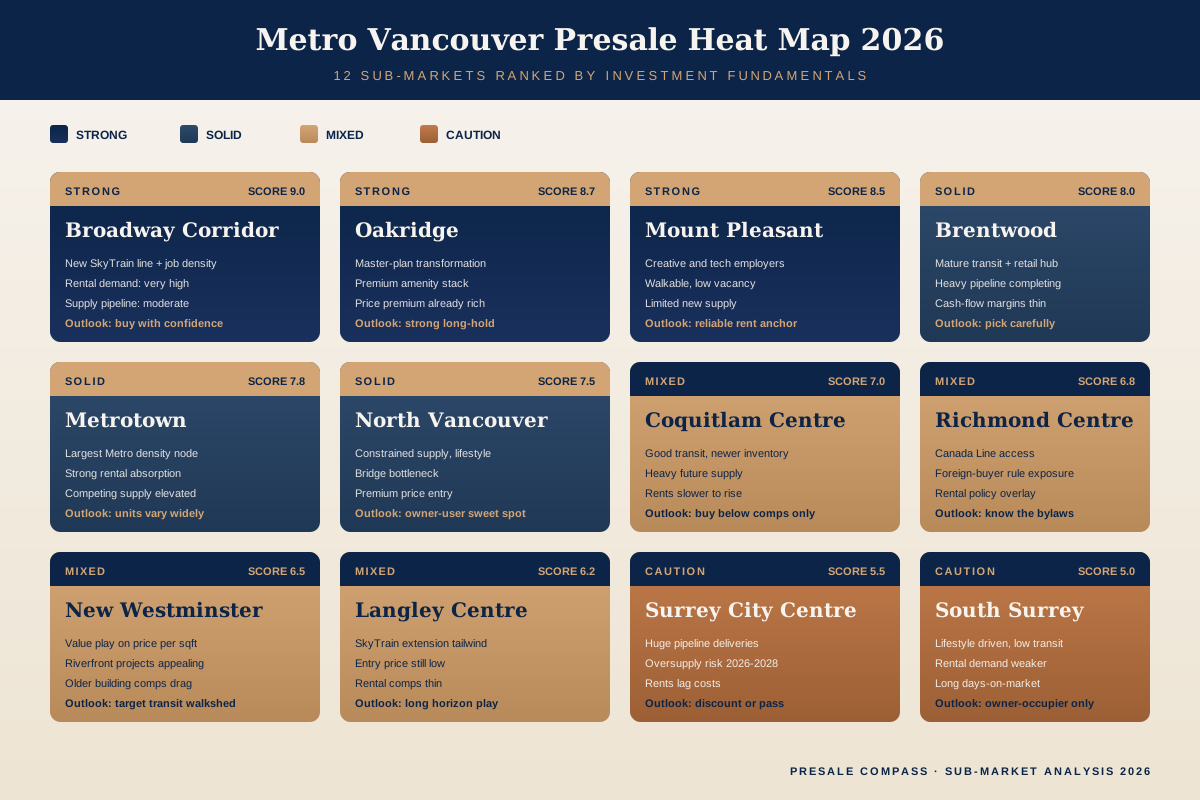
Always verify current project-level supply in your specific neighbourhood, not the sub-market label.
Contract Clause Red-Flag Checklist
Here are eight clauses to flag with your real estate lawyer before signing. They often decide whether a deal makes or breaks you:
- Material change clause: can the developer alter floor plan, sq ft, or finishes unilaterally? Cap substitution rights.
- Assignment clause: is assignment permitted, and what fee applies? In 2026 you want this open.
- Early termination and rescission window: BC gives you a 7-day rescission period; confirm you get it.
- Deposit protection: deposits must be held in trust per the Real Estate Development Marketing Act, administered by BCFSA.
- Completion date “outside date”: the latest date by which the developer must complete before you can walk. Two-year limits are reasonable.
- Interim occupancy fees: if the building allows occupancy before strata registration, are you charged extra?
- Upgrade substitution rights: developer’s right to swap materials. Require equivalent-or-better language.
- Rental restriction clauses: some new buildings restrict short-term rentals or impose lease minimums.
Most sales-centre contracts are developer-favouring by default. Every clause is negotiable in 2026’s buyer-leaning market.
Opportunity Cost: Are Presale Condos a Good Investment in Vancouver Compared to Other Options?
What if, instead of putting a $150,000 deposit into a Vancouver presale over 36 months, you deployed it elsewhere?
- High-interest savings (5.0%) on $150K staged deposits: about $12,000 to $18,000 total interest over the build.
- Dividend-weighted Canadian ETF (7.5% annualized historical): about $36,000 to $45,000 total return.
- Resale 1-bed condo with BRRRR-style re-leverage: capture today’s benchmark discount plus immediate cash flow from day one.
- Vancouver presale: zero interim return, leveraged upside if appreciation exceeds roughly 3.5% per year, capped downside equal to deposit plus appraisal gap.
A presale only outperforms the ETF scenario if Vancouver condo appreciation exceeds roughly 5% per year over the 7-year hold. That’s possible, but not baseline.
Who Should (and Shouldn’t) Buy a Vancouver Presale in 2026
Good fit:
- Owner-occupiers with a 7+ year horizon who qualify for the new GST rebate.
- Investors with 30%+ of purchase price in liquid reserves, enough to cover appraisal gaps and closing costs without financing stress.
- Long-term buy-and-hold investors targeting 2028 and 2029 completions in supply-constrained sub-markets.
- Families locking in today’s PSF in a transit-anchored location they plan to live in for a decade.
Poor fit:
- Short-term flippers (the 20% flipping tax alone kills the math).
- Investors relying on the presale to cash-flow from day one at current rates.
- Buyers without reserves to cover a $100K+ appraisal shortfall.
- Anyone buying from a developer with fewer than five completed BC projects.
Already Bought at the Peak? Your 2026 Recovery Playbook
This is the section every other article skips, and it’s where many Vancouver buyers urgently need guidance. Before deciding, review the Canada Revenue Agency’s GST/HST new housing rebate page and speak to a real estate lawyer. If you signed a presale at the 2021 or 2022 peak and your unit is now completing into a softer market, you have four options:
- Complete and hold (7+ years). Historically the highest-expected-value path if you can absorb the cash-flow gap and potential appraisal top-up. Rebuild equity through amortization and the next cycle.
- Assign at a loss now. Sets a firm, known loss. Frees your capital. Current assignment market is thin; expect 10 to 25% below original price in many sub-markets. Beware: original buyers often remain contingently liable if the assignee defaults.
- Complete and rent at negative cash flow. Works if you have income to absorb the shortfall and believe in a 5 to 7 year recovery.
- Walk away and forfeit the deposit. Nuclear option. Developer may sue for damages beyond deposit. Requires legal counsel.
None of these are good options. All of them are better than the fifth option, doing nothing and missing the outside completion date in default.
The 2026 Verdict: Are Presale Condos a Good Investment in Vancouver?
For the right owner-occupier with a long horizon, buying a 2028 or 2029 completion from a top-tier developer in a supply-constrained sub-market, with reserves to absorb shocks, yes, Vancouver presale condos can still be a sound investment in 2026. Probably the best buyer-side conditions in a decade, in fact.
For short-term investors, thin-deposit buyers, or anyone buying a 2026 or 2027 completion in an oversupplied sub-market, no. The math doesn’t work, and pretending otherwise is how people lose six figures.
Use the Scorecard. Run the break-even math. Check the completion cohort. Then decide.
So, are presale condos a good investment in Vancouver in 2026? Yes, if the deal scores 70+ on the framework above, completes in 2028 or 2029, and sits in a supply-constrained sub-market. Otherwise the resale market almost certainly serves you better.
Ready to pressure-test a specific project? Browse live, vetted Vancouver presale opportunities on our Metro Vancouver presales map, start with our Vancouver city hub for neighbourhood-level filters, or compare cross-city options in Burnaby, Richmond, Surrey, Coquitlam, Langley, and North Vancouver.
Frequently Asked Questions
1. What minimum deposit do I need for a Vancouver presale in 2026?
Most projects require 15 to 20% in staged deposits over 12 to 24 months. On a $750,000 unit, that’s $112,500 to $150,000 in deposits, plus 7 to 10% in closing costs at completion. Plan for 30% of purchase price in accessible capital.
2. Can I still make money on a Vancouver presale if I’m not a first-time buyer?
Yes, but the path is narrower. You lose the new first-time buyer GST rebate, so expect 5% GST as a true cost. Investment upside now depends on appreciation plus rental income over a 7+ year hold, not on assignment flips.
3. What’s the single biggest mistake Vancouver presale investors make?
Not stress-testing for the appraisal gap at completion. Thousands of 2021 and 2022 buyers are now scrambling for $50K to $200K of extra cash because their unit appraises below the contract price. Always underwrite for a 10% valuation drop before signing.
4. Are presales better than resale condos in 2026?
For most buyers today, resale is the better pure-investment play because it offers immediate cash flow, no GST, and known condition. Presales win when (a) you value the 2-5-10 warranty, (b) you have a 7+ year horizon, (c) you’re targeting a location with no resale equivalent, or (d) you qualify for the new first-time GST rebate.
5. Which Metro Vancouver neighbourhoods are safest for presale investment right now?
Sub-markets with limited 2027 to 2029 pipeline, confirmed transit, and strong end-user demand: East Vancouver, Mount Pleasant, parts of North Vancouver, Oakridge and Cambie, and emerging station areas in New Westminster. Be cautious in Brentwood, Metrotown, and Surrey City Centre until 2026 and 2027 completions clear.
6. So bottom line, are presale condos a good investment in Vancouver in 2026?
For long-horizon owner-occupiers and patient investors buying 2028 and 2029 completions from top-tier developers in supply-constrained sub-markets, yes, the buyer-side conditions are arguably the strongest in a decade. For short-term flippers, thin-reserve buyers, or anyone chasing 2026 and 2027 completions in oversupplied areas, no. The framework, cohort table, and break-even math in this article are designed to give you a defensible, data-driven answer rather than a gut call.
Your Next Move: Turn This Framework Into a Real Decision
Reading this guide is the easy part. Applying it to a specific project, one with a real address, a real developer, a real contract, and a real completion date, is where investors either protect their capital or put it at risk. If you take one thing away from this article, let it be this: never sign a presale contract based on a sales-centre pitch alone. Score the deal, check the completion cohort, stress-test the numbers, and read the fine print.
Presale Compass was built exactly for this. We visit, vet, and compare 100+ active Metro Vancouver projects so you don’t have to chase brochures one at a time. If you’re ready to find out whether a specific project actually scores 70+ on the framework above, or whether the resale market would serve you better, here’s where to start:
- Explore active projects by city: jump into the Vancouver presale hub, compare with Burnaby, Richmond, Surrey, Coquitlam, or Langley.
- Visualize the full pipeline: open the Metro Vancouver presales map to filter by completion date, price, and sub-market risk.
- Get a free, no-pressure second opinion: book a consultation with our team and we’ll run the Scorecard, cohort analysis, and break-even math on the specific project you’re considering.
The question, are presale condos a good investment in Vancouver in 2026, has a different answer for every buyer and every project. Get yours before you sign, not after. Your future self will thank you.